Aizkraukles Manor - A Baroque Masterpiece of Vidzeme
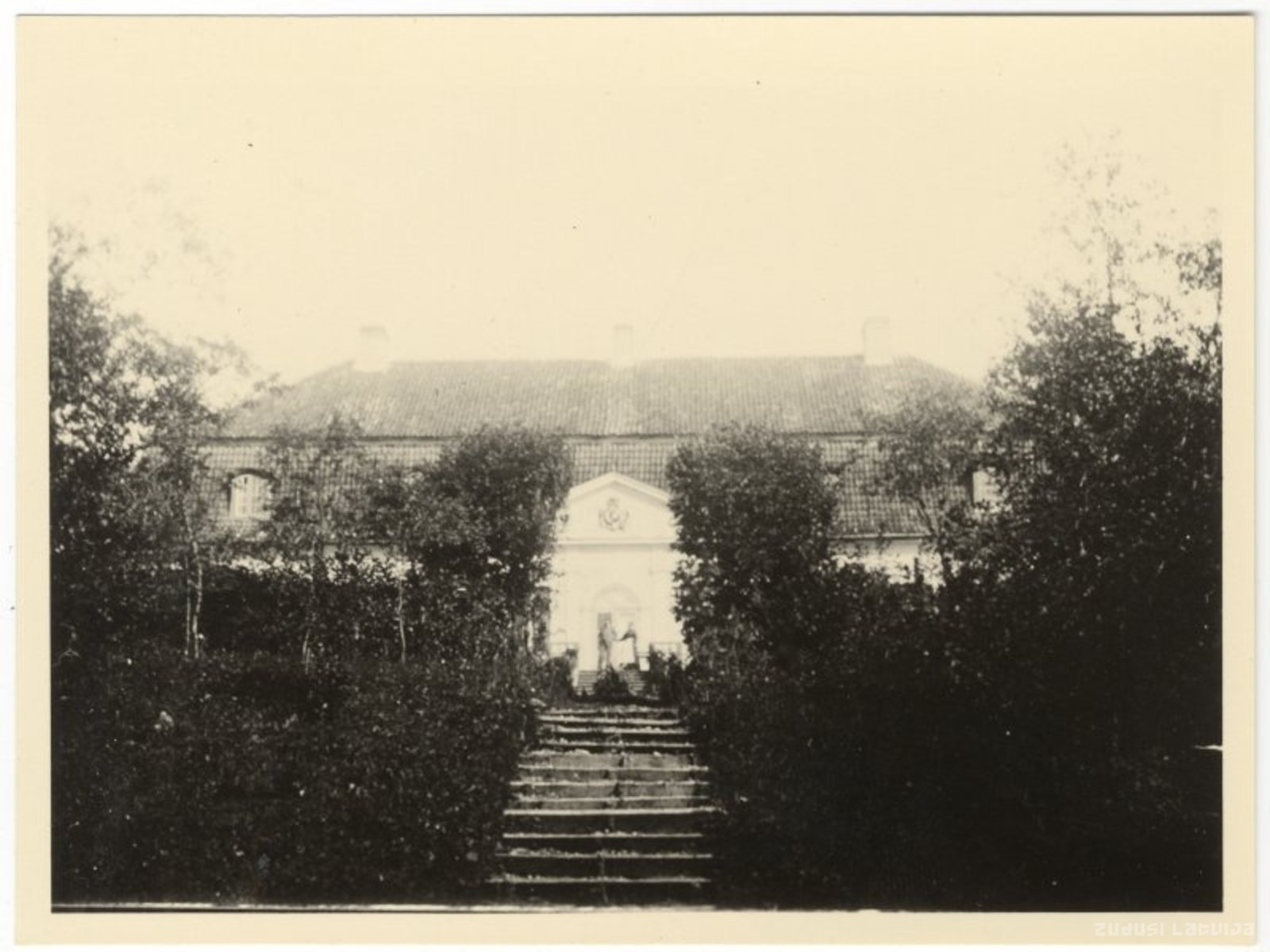
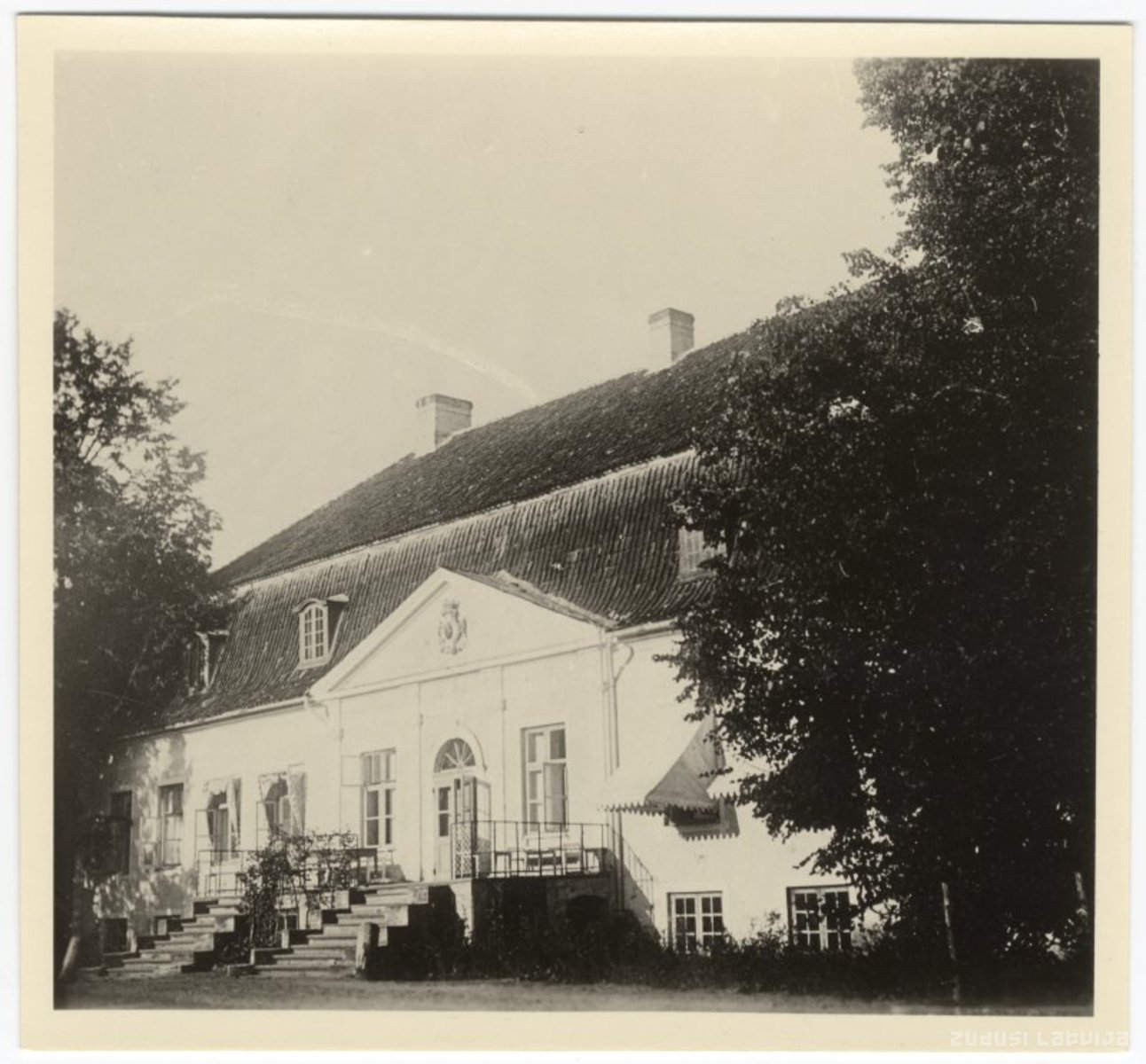
Aizkraukles Manor is a significant historical witness to 18th-century Latvian cultural and architectural heritage. In 1761, Baron Carl Friedrich Schoultz von Ascheraden built the manor house on a hill overlooking the Daugava River according to his own design. This two-story stone building with a mansard roof became known as one of the finest examples of Vidzeme Baroque architecture. Its facade was decorated with a central risalit featuring a triangular pediment, and the building had a high, distinctive basement story.
Keeper: Latvian National Library
Photo rights: Latvian National Library. Use with attribution.
Outstanding Interior Decoration
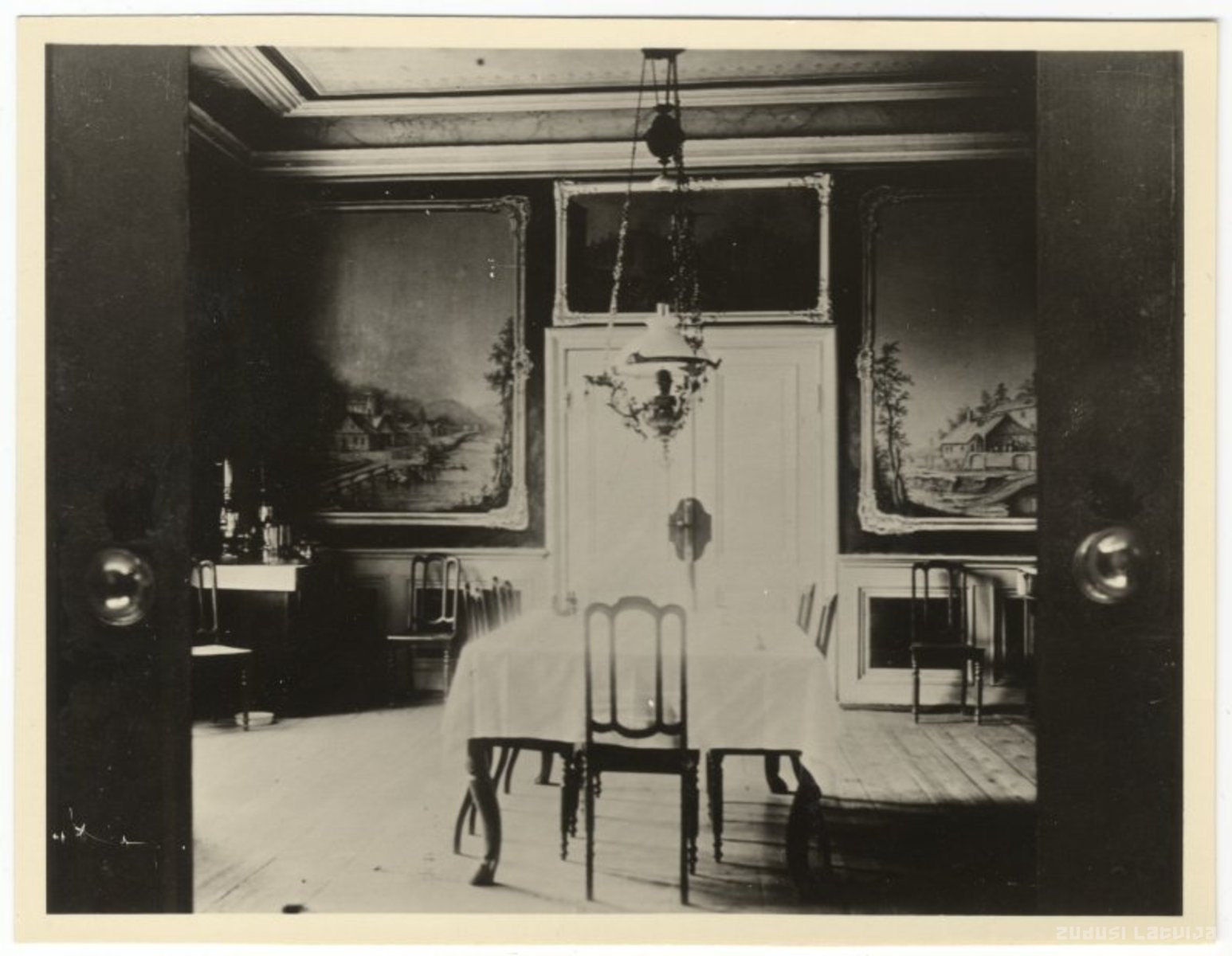
The manor's interior paintings were created by the famous Riga artist Andreas Wilhelm Stelling. He decorated the walls of various rooms with refined decorative motifs. One room featured architectural views, while another displayed landscape motifs. Stelling also created eight decorative suprapanels or overdoor paintings, whose compositions showed influences of Classicism.
Keeper: Latvian National Library
Photo rights: Latvian National Library. Use with attribution.
A Progressive Baron and His Contribution
Baron Carl Friedrich Schoultz von Ascheraden (1720–1782) was a prominent Livonian statesman. He served as Landrat and was a delegate of the Livonian nobility in St. Petersburg and Moscow, where he defended noble privileges. However, he was also relatively progressive for his time. In 1764, he issued a legal document to his peasants, granting them certain property rights over their own farms and allowing them to retain personal possessions. This step was a significant attempt to reduce peasant dependency in the Baltics and became a model for other manor owners.
Keeper: Latvian National Library
Photo rights: Latvian National Library. Use with attribution.
History and Present Day
The manor complex was almost completely destroyed during World War I. Today, no visible ruins of the former main house remain, but in the manor park, there still stands a small, architecturally unique pavilion – a two-story hexagonal building with a domed roof. This is an important reminder of the former grandeur and rich history of Aizkraukles Manor.
The Importance of Manors in Latvian History
To fully understand the significance of Aizkraukles Manor, we must consider the broader historical context. Over a thousand manors once existed in Latvian territory. They were not merely residences of Baltic German nobility, but for centuries served as rural economic centers, administrative hubs, and centers of culture and social life.
Centers of Culture and Economy
The manor complex typically included not only the main house but also extensive farm buildings – stables, granaries, cowsheds, servants' quarters, managers' homes, and other structures. In some cases, churches, schools, and other public buildings also stood on the manor grounds. Thus, manors often formed unique, partially self-sufficient rural settlements. Manor architecture reflected various European styles – Baroque, Classicism, Historicism, Neo-Gothic, and others. This stylistic diversity has become an important part of Latvia's cultural-historical landscape.
Historical Heritage
The fate of Aizkraukles Manor – its construction in the 18th century, its flourishing, its destruction during World War I, and the survival of only fragments to the present day – also reflects Latvia's complex and troubled history. Many other Latvian manors have experienced similar fates: damaged in wars and revolutions, destroyed by fire, or abandoned over time. Today, manors are an essential part of Latvia's cultural heritage, but many remain endangered and require preservation and restoration.
Other Manors in the Aizkraukles Area
The Aizkraukles area is a unique microcosm of this history, containing several important manor estates, each with its own story.
Stukmaņi Manor
The Stukmaņi Manor complex was formed in the 17th-18th centuries. It is a state-protected cultural monument that survives today mainly as ruins and individual buildings. The manor is also listed among Latvia's most significant and endangered cultural monuments.
Odziena Manor
Odziena Manor was built in the Neo-Gothic style around 1860 and was once one of the most impressive examples of this architectural style among Latvian manors. The manor was damaged during the 1905 revolution but was later partially restored. Today, the manor complex has been reborn as a cultural-historical and tourism site, with guest accommodation and brewing facilities.
Gricgale Manor
Of what was once an extensive Gricgale Manor complex, formed around the mid-18th century, only a few buildings survive to the present day. The manor is also significant for its connection to writer and teacher Lūcija Ķuzāne, who was born there. Today, the preserved historic buildings are used for cultural activities, allowing the manor territory to continue serving an important public function.
The Importance of Historic Manors Today
Aizkraukles Manor and other Latvian manors are not merely monuments to the past. They are a living connection to Latvia's culture, history, and identity. Once important centers of rural life, economy, and culture, manors can today become significant centers of culture, tourism, and public life. Preserving manors not only allows us to appreciate architecture and historical events but also helps us better understand the development of Latvian society, the interaction of different periods, and the life stories of its people. The history of Aizkraukles Manor is a particularly vivid example of how multifaceted Latvia's cultural heritage is. Although the main house itself has not been preserved to the present day, the park and the pavilion within it still evoke the former significance and architectural splendor of the manor complex. Preserving and restoring such places is essential so that future generations have the opportunity not only to read about Latvian history but also to see it and experience it in its authentic setting.